

About an hour after Connor McDavid brought the 4 Nations Face-Off to a dramatic Canadian gold medal victory with his overtime goal against the United States almost a year ago, former NHL player and national TV analyst Ray Ferraro was still shaking his head in disbelief.
Standing not far from the locker rooms at TD Garden in Boston as the players and staff packed up their gear preparing to depart the rink and return to their regular NHL life, Ferraro couldn’t quite get his head around everything he had just witnessed, not just in the compelling championship game, but throughout the duration of the four team, nine-day tournament.
Ferraro wasn’t calling the first game of the tournament between Canada and Sweden in Montreal, but was able to watch the emotional start to the competition as a spectator, observing Hockey Hall of Famer inductees Mario Lemieux and Daniel Alfredsson joining local youth players on the ice before a sold-out crowd at Bell Centre.
Ferraro found his eyes widening as Canadian Nathan MacKinnon launched a heavy check on Swedish captain, Victor Hedman, in the opening moments of the game. A moment later, one of Hedman’s teammates knocked McDavid to
the ice with a similarly exuberant check.
“I was like, ‘Oh, these guys are here to play.’ And so that was the moment for me anyway, that I thought of things a little differently,” Ferraro said.
The pace and urgency of the games wouldn’t let up from puck-drop in Montreal to a grand Canadian celebration in Boston.
“I thought it was unreal. I thought the guys gave every bit of effort that they could give,” Ferraro said. “It left us wanting more, put it that way. For me personally, it exceeded everything that I could have thought. It outkicked everything that I thought it was going to do.”
With NHL players absent from the Olympics since 2014, and with the last World Cup of Hockey held in 2016, the reality is that no one knew exactly what to expect when the NHLPA and the NHL announced their plans for a mid-season best-on-best tournament featuring the top players from Canada, the United States, Sweden and Finland.
Well, maybe not everyone.
Ron Hainsey played 1,132 regular-season NHL games and won a Stanley Cup with Pittsburgh in 2017. Now serving as the assistant executive director for the NHLPA, Hainsey has been at the heart of helping to create a new international best-on-best calendar – a calendar that started with 4 Nations and will continue seamlessly with the Milano Cortina 2026 Olympic Winter Games in a matter of weeks and on to the 2028 World Cup of Hockey.
Hainsey believed that as long as the NHLPA and the NHL provided the proper structure and framework, the players would take care of the rest in creating something memorable for a hockey world starving for best-on-best competition.
“It’s the guys on the ice that have to deliver and our guys deliver when they get out there. So, it's on us to create the stage for them to be able to showcase themselves,” Hainsey said.
It was the case at 4 Nations and there is no reason to suggest that the product on the ice in Italy will be anything but electric.
“It's another great opportunity for our guys, not only to represent their country, but on a global stage to showcase their talents, put on a great event,” Hainsey said of the upcoming Olympics.
What is constant through all of this is the unwavering passion NHL players have to play for their countries at best-on-best events.
“I knew it wouldn’t be an All-Star Game,” offered Pete DeBoer who was an assistant coach with the Canadian squad at 4 Nations, a role he will reprise in Milan.
“The big dogs had not played best-on-best in so long that there was an underlying current of energy there to play and we probably all should have recognized that, probably a little bit more than we did,” DeBoer explained.
Would there have been excitement building for Milano Cortina 2026 without 4 Nations? Of course.
But did the off-the-charts level of competition and emotion on the ice at 4 Nations, coupled with the fervor of the fans watching live and on television around the globe, act as a catalyst to the growing anticipation for the Games in Milan?
Without a doubt.
In the wake of the success of 4 Nations, players’ profiles have continued to grow across the NHL landscape, even though the vast majority of the 140+ NHL players named to Olympic rosters have never played in an Olympics.
Take the growing popularity of the new Wingmen podcast featuring brother Matthew and Brady Tkachuk, developed by the same creative forces behind the hit New Heights podcast featuring NFL brothers, Travis and Jason Kelce.
The sport itself has permeated all corners of the pop culture scene, thanks in large part no doubt due to the hit series “Heated Rivalry”, which has many non-traditional fans talking and learning about the game. Two of the actors in the series presented at the recent Golden Globe Awards and prompted a hockey joke from host Nikki Glaser. There’s a popular new commercial in the United States featuring members of Team USA alongside actor Jon Hamm, which has been creating its own buzz as they joke about harvesting Canadian tears at the Games.
Given all of this, it’s hard not to consider the 4 Nations Face-Off as a delectable appetizer leading into what promises to be the hockey equivalent of the horn of plenty, a veritable smorgasbord of the best that hockey has to offer at the Olympics.
“I think it's really important that the NHL is in the Olympics,” said Team USA general manager Bill Guerin, who was part of the first Olympic tournament featuring NHL players in 1998 in Nagano, Japan.
“Obviously for the players as individuals, I'm thrilled for all the guys. They've been waiting for this and they want this. This is such an amazing experience. And then just for the game … We have an incredible sport, and just to be able to have our best players play on the biggest sports stage in the world is amazing. It's awesome.”
Even though Sweden didn’t lose a game in regulation at 4 Nations, they still finished fourth. Still, the experience has those players bristling with excitement as the Games in Milan approach.
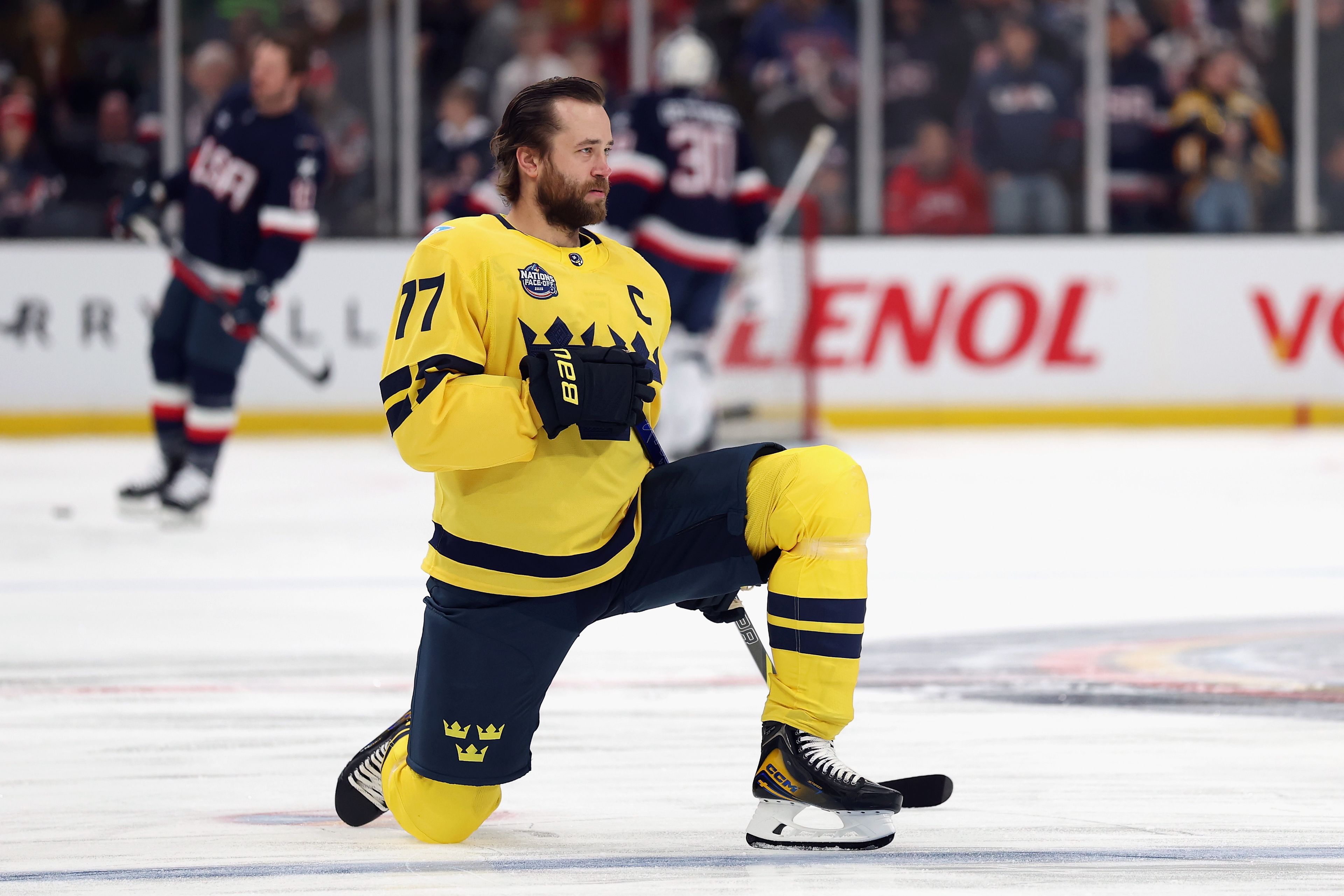
“For sure, it was a ton of fun, and it does make me look forward to Italy,” said Swedish captain Victor Hedman. “I think the most excitement is that we showed that we have a phenomenal team that can compete with Canada, the U.S. and the Finns. We proved to ourselves and I think we proved our game is some of the best. We have some of the best players in the world and when our game was clicking, we were keeping even strides with the best of them.”
For the four countries that took part, the event was an invaluable opportunity to test out systems, personnel and coaching tactics at the highest level.
As Guerin said in a recent interview, 4 Nations was a great chance to look under the hood of the U.S. team’s machine and see how the parts all fit together.
“It was nice to see how guys kind of operate, how they carry themselves,” Guerin said. “It was definitely a good thing that we got to do that.”
He must have liked what he saw as Guerin named 21 members of the 4 Nations U.S. roster to the Olympic squad.
For all 12 teams who will take part in the Milan tournament, the brand of hockey on display at 4 Nations will have provided an important blueprint for what lies ahead.
DeBoer felt the compete level in Montreal and Boston was on a par with the Stanley Cup Playoffs, and that knowledge will be an important learning tool when the field grows from four teams to 12 national teams in Milan, including other strong hockey nations like Czechia, Switzerland and Germany.
“It's heavy, it's hard, there's no room, there's a premium on interior ice and both net fronts,” DeBoer explained.
“Everybody checked well. It was NHL playoff hockey and the same things that were important at NHL playoff time, I think, were important at the 4 Nations,” he added.
The big difference moving into the Olympics will be the length of the competition with three round-robin games for each team, a play-in round for the bottom eight teams and then the elimination stage of the tournament leading up to the medal games.
The longer tournament will provide players an opportunity to work themselves into more prominent roles with their respective teams. As Ferraro noted, players won’t get ‘lost’ in a longer tournament and will get a better chance to prove their mettle.
Canadian netminder Jordan Binnington played every minute of the 4 Nations Face-Off and was superb in leading Canada to the championship. It’s less likely that one goalie will shoulder the entire load at the Olympics. The rosters have also been expanded to 25 players, including 22 skaters, meaning there are more challenges for coaches when it comes to roster decisions.
“The [Olympic] tournament play is so much different. There's more teams. There are the different challenges of playing over in Europe, as opposed to playing in the facilities that you're most comfortable in,” said Ferraro. So, I think there's all of that. You're in the Olympics, there's different rules, different protocols, different security. So, all those things that come along with an Olympics that the guys didn't have to deal with in the 4 Nations, and it'll make it all just a little bit different.”
Even getting to and from the rinks may be different. In Sochi, players from many teams took advantage of the free bicycles scattered around the Olympic Village to bike to and from practice rinks and for games.
Still, as much as it will be different when the puck drops in Milan, it will be hard not to think back to those rollicking moments in Montreal and Boston and realize just how much the appetite to see the greatest hockey players in the world in competition has been whetted for fans and players alike.
Feature photo courtesy of Getty Images