

The aftermath of an Olympic hockey tournament is invariably shot through with a sense of melancholy.
From gold medal winners to gold medal losers (as everyone tells you, you win a bronze, you lose a gold), to all the teams that slowly fall by the wayside as an Olympic tournament progresses, there is a universal feeling of wishing that it didn’t have to be over.
That feeling akin to the end of summer vacation, Christmas holidays and New Year’s Eve all rolled into one.
“Just empty. It’s tough,” said a crestfallen Mika Zibanejad after he’d tied Team Sweden’s quarterfinal match against Team USA late in regulation, only to see Quinn Hughes score in overtime to send the Swedes home without a shot at a medal at the Milano Cortina 2026 Winter Olympics in February.
No matter the expectation, whether a team is simply happy to be in the competition or one that fell somehow short, that look of emptiness as the players make that long walk through the media mixed zone knowing that when they take their skates off this incredible moment and opportunity is at an end.
It might be the best way to describe how and why the Olympics are so important to NHL players.
I went back through my notes after Milan and player after player from each of the 12 teams that took part in the epic competition echoed this sentiment in one form or another – best two weeks of my life.
Canadians, who lost in the gold medal game in overtime to the United States, said this.
So, too, did surprising Team Slovakia who lost in the bronze medal game to Finland.
Veteran Canadian defenceman Drew Doughty, who took home a silver medal to go with the twin golds he earned with Canada in 2010 and 2014, kept shaking his head talking about the brotherhood of Team Canada and how when they’re all in their 50s, they’ll still be like family. The only thing is they won’t have a gold medal to share in their twilight years, Doughty lamented.
It’s not just the words, it’s the moments, the images, which convey all that goes into an event like an Olympic hockey tournament.
One image that will stay with me is of Sweden defenceman Victor Hedman. After preparing for the quarterfinal game against the U.S., Hedman told the coaching staff an injury was going to keep him from playing. The coaching staff could have made a roster change but it was decided Hedman would sit on the bench with his teammates in full gear.
He didn’t take a shift.
But he was shoulder to shoulder with players he grew up playing with and with whom he shared his first Olympic tournament.
I talked to Hedman before the Games and his anticipation at the event was contagious, how he looked forward to sharing it with his two young children and family. And how he figured Milan might be his last Olympic opportunity.
And that’s part of all this, too.
But, what sets the end of Milano Cortina 2026 apart from the end of the 2006, 2010 and 2014 Games is that the distance between the end of one magical moment and the beginning of another isn’t so pronounced.
And maybe that’s why the melancholy, while still real, may have a shorter half-life.
Four years between Olympics is a long time to wait. For an NHL player of a certain age, it can span the transition from player to former player.
Many players who took part in Milan wondered aloud whether this would be their last or only Olympic fling.
Hedman acknowledged it. So, too, did Nino Niederreiter, Radko Gudas, Gabe Landeskog and Drew Doughty. Look at the calendar and go down the list; Sidney Crosby, Brad Marchand, Oliver Ekman-Larsson, Olli Maatta, Brock Nelson are all players whose participation in France in four years is unknown.
But these Olympics marked the start of an audacious new era of best-on-best hockey that will change the international calendar as it relates to the NHLPA and the NHL and the cadence for players and fans alike.
Two years from now the World Cup of Hockey 2028 will take place in North America and Europe. In fact, earlier this month, the NHLPA and league announced that Prague’s O2 Arena will host seven games in Europe while the new Scotia Place, being built in the heart of Calgary’s downtown entertainment district, will play host to seven more games while both semifinal games and the final will be up the road at Rogers Place in Edmonton, home to the Edmonton Oilers.
“Coming off the amazing international hockey played at the recent Olympic Winter Games, NHL players are very excited to return to international hockey at the World Cup of Hockey 2028,” said Marty Walsh, NHLPA executive director. “Calgary, Edmonton and Prague are cities with very deep roots in hockey, and the games will be played in three hockey venues that will be amongst the best in the world. The players cannot wait to don their home countries’ sweaters in Alberta and Prague in February 2028.”
The three host cities were chosen from 28 applications to host games.
It will mark the first World Cup of Hockey event since 2016.
The 2028 tournament will follow as part of a progression of international events that began a year ago with the wildly successful 4 Nations Face-Off featuring the best U.S., Canadian, Swedish and Finnish players in a compact event in Montreal and Boston. It caught the imagination of fans and players alike with Canada beating the U.S. in overtime in the championship game in Boston.
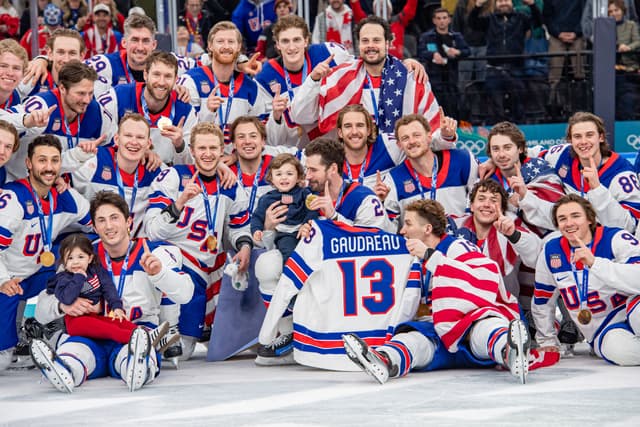
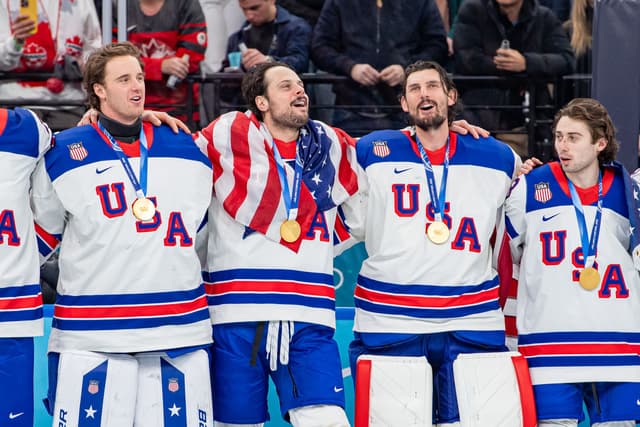
That set the stage for what was a compelling tournament in Milan that featured three overtime games in the quarterfinal stage of the tournament, one overtime and a near-overtime game in the semifinals and a gold medal game that went to overtime with Jack Hughes scoring the golden goal and bringing home an Olympic gold medal for the U.S. men’s hockey team for the first time since 1980.
Already the debate rages as to whether Team USA’s dramatic win over Canada, thanks to Hughes and other-worldly goaltending from Connor Hellebuyck, has changed the world order of the game.
That debate no longer has to percolate for four years but will come to the forefront now in just two.
“It’s been the best experience of my life in hockey, and the Olympic spirit is what I think we had,” Team USA forward Dylan Larkin said after the gold medal game.
“And that’s a pretty powerful thing, because it's been so awesome representing the USA, Team USA,” Larkin added. “When you're around all the other athletes, the best athletes in the world, and you get to talk to them and be around that environment, it's contagious … we get to hang and talk to figure skaters and speed skaters, and it's just, winning gold, I think, is contagious, and being around them, being around winners, being around great athletes, was something that I'm very appreciative we did.”
Tomas Hertl was like many participants in Milan, over the moon to have been able to share his first Olympic experience with his family who traveled from Czechia to Italy watching Team Czechia lose a heartbreaker in overtime to Canada in the quarterfinals. And like many NHL players, Hertl said he will keep those memories close to his heart for many years to come.
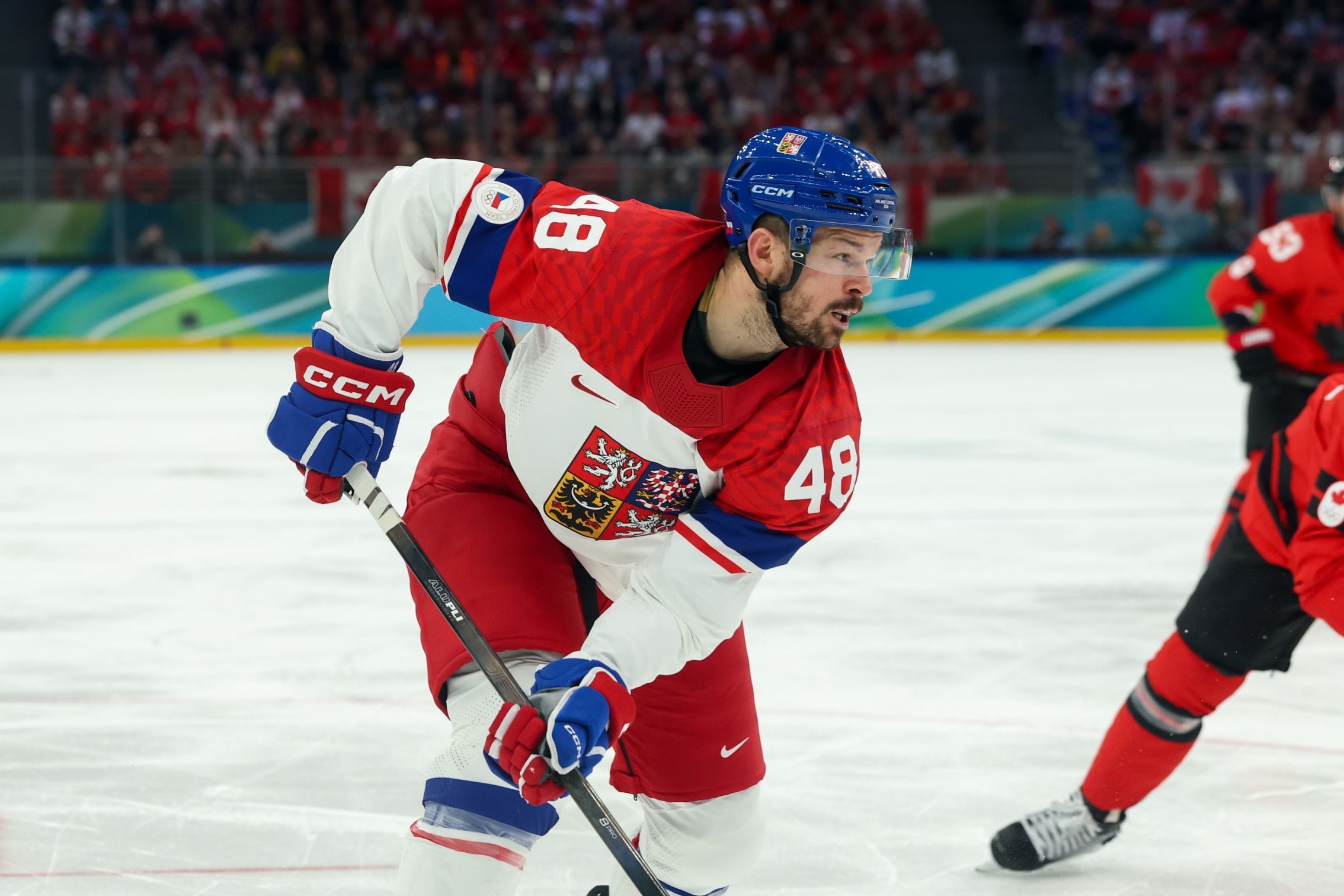
“You never know when it could be your last time,” Hertl said.
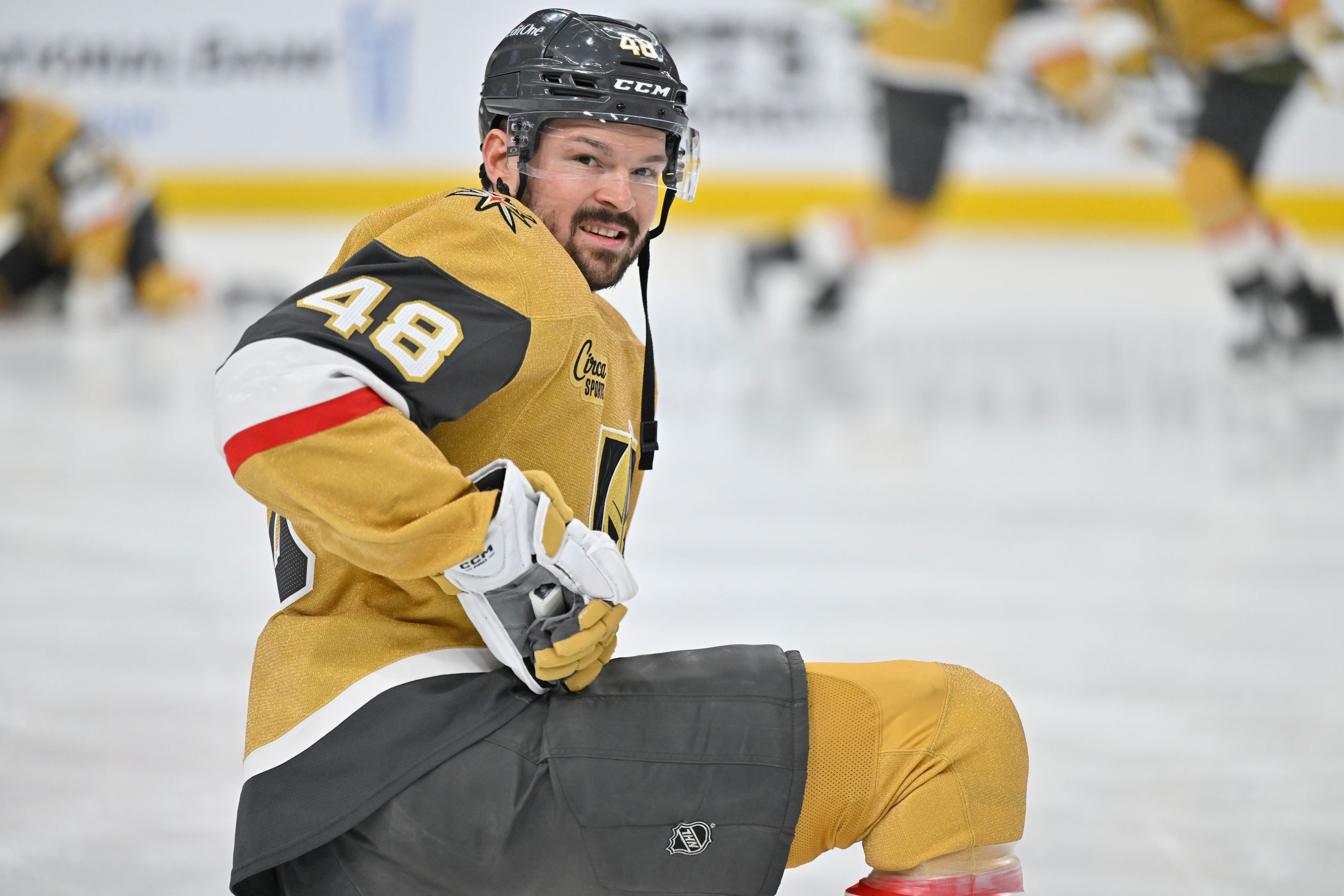
The Vegas Golden Knights forward has lots to occupy his time in the short-term, like winning a Stanley Cup. Still, the news that his hometown of Prague would be the European host for the World Cup of Hockey 2028 came as an exciting boost for him.
“It’s huge,” said Hertl.
The country continues to work to try and reestablish itself as an international hockey presence, and being chosen to host games at the next best-on-best competition serves to reinforce that Czechia is and remains a hockey nation.
“It shows how people love hockey,” said Hertl who grew up playing in Prague and played two years as a pro before coming to North America and the NHL in 2013.
Hertl takes nothing for granted vis a vis being named to Team Czechia in 2028, but the idea of playing once again against the world’s best is enticing.
“This will be almost similar to the Olympics, just the best players playing,” Hertl said.
And he has no doubt fans will be fighting for tickets to watch all of the action in the place he calls home.
Go back to the foundation of the tournament with the old Canada Cup events that took place before NHL players started going to the Olympics in 1998, and you’ll discover that these events created seminal hockey moment in and of themselves.
Before the NHL started playing in the Olympics, the Canada Cup, and then the World Cup of Hockey, which debuted with the dramatic win by Team USA over Canada in 1996, were the only opportunities for the world’s best hockey players to compete on the same stage to truly test their mettle against the very best the game had to offer.
Now, the new international schedule with a World Cup of Hockey tournament every four years will augment the Olympics and allow players and fans to enjoy a cadence of best-on-best competitions that has never been seen before.
Organized by the NHLPA and NHL along with support from the International Ice Hockey Federation, the World Cup of Hockey will feature eight teams, four fewer than the 12 teams that took part in the Olympics in Milan.
The games will have a definite North American feel with the NHLPA and NHL coordinating rules and tournament organization.
For instance, the expectation is that overtime situations during elimination play will not feature three-on-three play as was the case in Milan.
At the heart of this, though, will be the excitement of the opportunity the players of the eight countries and their fans.
It brings me back to another moment in Milan.
After Canada manhandled Team France 10-2 in group play, I was watching Canadian captain Sidney Crosby make his way through the mixed zone talking to reporter after reporter. Waiting for him along Crosby’s trek was one of Team France’s netminders. The two had met at the world championships and the goalie asked if it would be possible to get a stick from Crosby.
The captain agreed immediately and arranged for a stick to make its way to the French netminder.
A small thing but a memory for a lifetime for a player whose name may never resonate within the broader hockey community.
“I think that's part of hockey. You do that over the years, trade sticks and things, and it's part of the experience,” Crosby said.
In two years’ time would it be a surprise if another player competing for his country at the World Cup of Hockey 2028 makes a similar request and receives a similar response from Crosby?
I would like to think it’s inevitable.
(Feature photo courtesy of Getty Images)