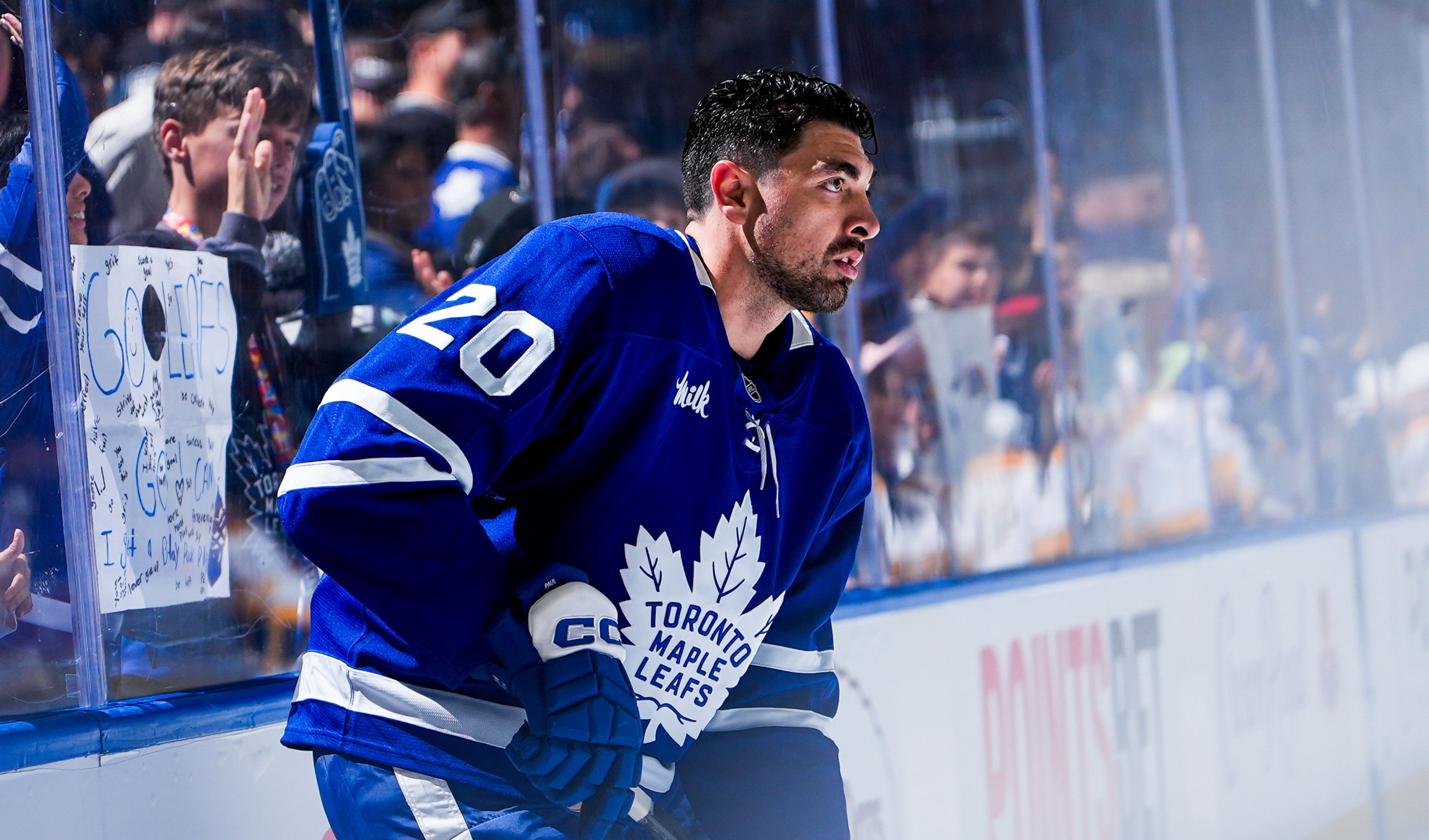


Wherever his hockey career has taken him and whatever uniform he’s worn, one mission has always followed Nick Paul.
Some 12 years into his NHL career, the 31-year-old Paul, playing in his first season with the Toronto Maple Leafs, remains a strong voice and advocate for mental health.
Through his Points by Paul initiative, with every point he gets this season, Nick will donate $150 to Jack.org, supporting youth mental health.
Shortly before World Mental Health Day, Paul reflected on what this day personally means to him.
“With the way the world is now, especially with social media, discussing and supporting mental health has never been more important,” Paul told NHLPA.com. “We have come a long way in accepting that it’s okay to let people know you are not okay, and to get help. Before, it was more about hiding it and trying to push through on your own. That doesn’t always work out, whatever the facet of your life that it happens to be.”
“To have all these resources and support now – helplines, facilities, camps, celebrities and people in the public eye – it truly makes a big difference for people who are going through difficult times and need somewhere to turn and to be inspired by other people’s openness. And if you can be a voice that gets a message of hope across, you embrace that opportunity.”
Paul certainly has.
He was playing for the North Bay Battalion in the Ontario Hockey League when he lost his high-school friend to suicide. Paul reached out to a local hospital to explore ways in which he could help.
It was through those discussions that Points by Paul was launched.
“When I was younger, I didn’t truly understand what mental health was all about. When my friend died by suicide, I wanted to do something. I started this initiative because I wanted to honour him and help others.”
Paul has also been open about his own mental health struggles.
He was drafted by the Dallas Stars in the fourth round of the 2013 NHL Entry Draft, but was traded to the Ottawa Senators the following year.
At the start of the 2019-20 NHL season, Paul was playing in the American Hockey League after not making the Senators roster for a fifth straight campaign.
The player dedicated to helping others was facing his own personal battles.
“I was trying to make the NHL and I was having a tough time,” he recalled. “I was dealing with a lot and it was hanging over me like a dark cloud. Whenever something went south, I would always go to the worst-case scenario because I was in that mindset. I would read social media posts about me and it was a snowball effect.”
Talking about those struggles would prove life-changing for Paul.
“The biggest help was when I started opening up and talking about it. I went to Florida, did some meditation, but also spoke to some wonderful people. From there, I started talking to my family, my girlfriend (Janessa), who is now my wife, and my friends. Being able to explain what I was going through… just the lifting of that pressure was so freeing. I was able to love the game again and feel better, mentally, than I had in a long time.”
Closing in on 550 regular-season NHL games, Paul is as dedicated as ever to championing mental health causes.
After becoming a full-time NHLer he reignited Points by Paul during his tenure with the Tampa Bay Lightning, with whom he played five seasons. The money raised went to the Crisis Center of Tampa Bay – a private, non-profit organization dedicated to ensuring that no one in the community has to face a crisis alone.
This season marks the first in which Paul is partnering with Jack.org.
The organization focuses on training and empowering young leaders to revolutionize mental health in their communities.
“We’re very excited about teaming with Jack.org,” said Paul. “They do great work in helping young people and creating awareness about the importance of mental health.”
Paul’s message to anyone struggling with their mental health is simple: don’t be afraid to reach out.
It’s advice he continues to live by.
“Don’t be afraid to talk to somebody. If you are able to talk to somebody, you might create a connection with someone who is also going through their own struggles. They won’t judge you for what you are going through. I always thought that people would judge me or have this opinion of me, but that wasn’t the reality. People want to help you, so don’t ever be afraid to take those steps.”