

It seems, on the surface, to be something that might be awkward, or messy even.
Swapping one sweater, and all that means in terms of team identity and camaraderie in pursuit of a Stanley Cup, for another one bearing the crest of your country, fueled by the fierce desire to bring home an Olympic medal for your teammates, family and friends (not to mention, an entire nation).
Sounds, well, complicated.
But it’s not, really. In fact, the chance to go through that transformation will be embraced by nearly 150 NHL players at the Milano Cortina 2026 Olympic Winter Games, the first Olympic tournament featuring NHL players since 2014.
Canadian defenceman Drew Doughty tells a great story about being a nervous second-year NHL player, tabbed to join Canada’ s powerhouse team at the 2010 Olympics in Vancouver, when superstar captain Sidney Crosby invited him to sit with him on the team bus one day. There was nothing specific about the conversation. It wasn’t Crosby schooling Doughty, but rather a conversation between two teammates, one a rising young star for the Los Angeles Kings and the other already a legend having won a Stanley Cup and been to another final as the captain of the Pittsburgh Penguins.
Doughty has often remarked the importance of that gesture and how it helped him feel like a member of the Canadian team. He reprised that story at last winter’s 4 Nations Face-Off when he arrived as a late addition to Canada’s lineup and ended up sitting next to a young Cale Makar in the Canadian dressing room, heaping praise on the defenceman (even though Makar was wearing Doughty’s familiar No. 8 jersey).
Nino Niederreiter was in his first season with the Minnesota Wild when he got the call that he would be part of the Swiss team at Sochi 2014.
The fifth overall pick in the 2010 NHL Draft had been traded in the summer of 2013 to Minnesota. He was trying to make an impression, fit in, all of those things that 21-year-old NHL players are trying to achieve.
When he got the call to join his countrymen at the Olympics, it didn’t change his relationships within the Wild locker room. In fact, he recalls being heartbroken for Wild captain Mikko Koivu, who suffered a broken ankle in early January 2014 and couldn’t play for Finland.
His Olympic selection didn’t change his relationships with Wild teammates Ryan Suter and Zach Parise, who played for the American squad, or the relationship with his good pal Mikael Granlund, who swapped his Wild jersey for the Finnish national team jersey.
It just put those relationships on hold for a couple of weeks.
Because in that moment, in being selected to play at the Olympics, the mindset does shift for players. For many NHL players chosen to represent their countries, the Olympic experience means a time to rejoin old friends with whom they have played in the past, and in many cases, with whom they have grown up, sharing dreams of playing for their country on this kind of stage.
“It was a very special feeling, because I think as a little kid, that's kind of like the peak, right? That was your biggest dream of hockey, playing for your hometown team, and then being able to play in the Olympics,” Niederreiter said.
“It felt like a dream, which you don't know if that ever will happen or not. But I do remember getting the phone call from the head coach, telling me, ‘You made the Olympics, congratulations.’ Now, you just got to stay healthy, got to make sure nothing happens and I'm able to go,” Niederreiter added.
“Then, once you’re on that plane with all your buddies, it was like, you know what? Now I'm an official Olympian. That was cool.”
The yin to reuniting with friends and countrymen at the Olympics is the yang of playing against your NHL teammates with so much at stake.
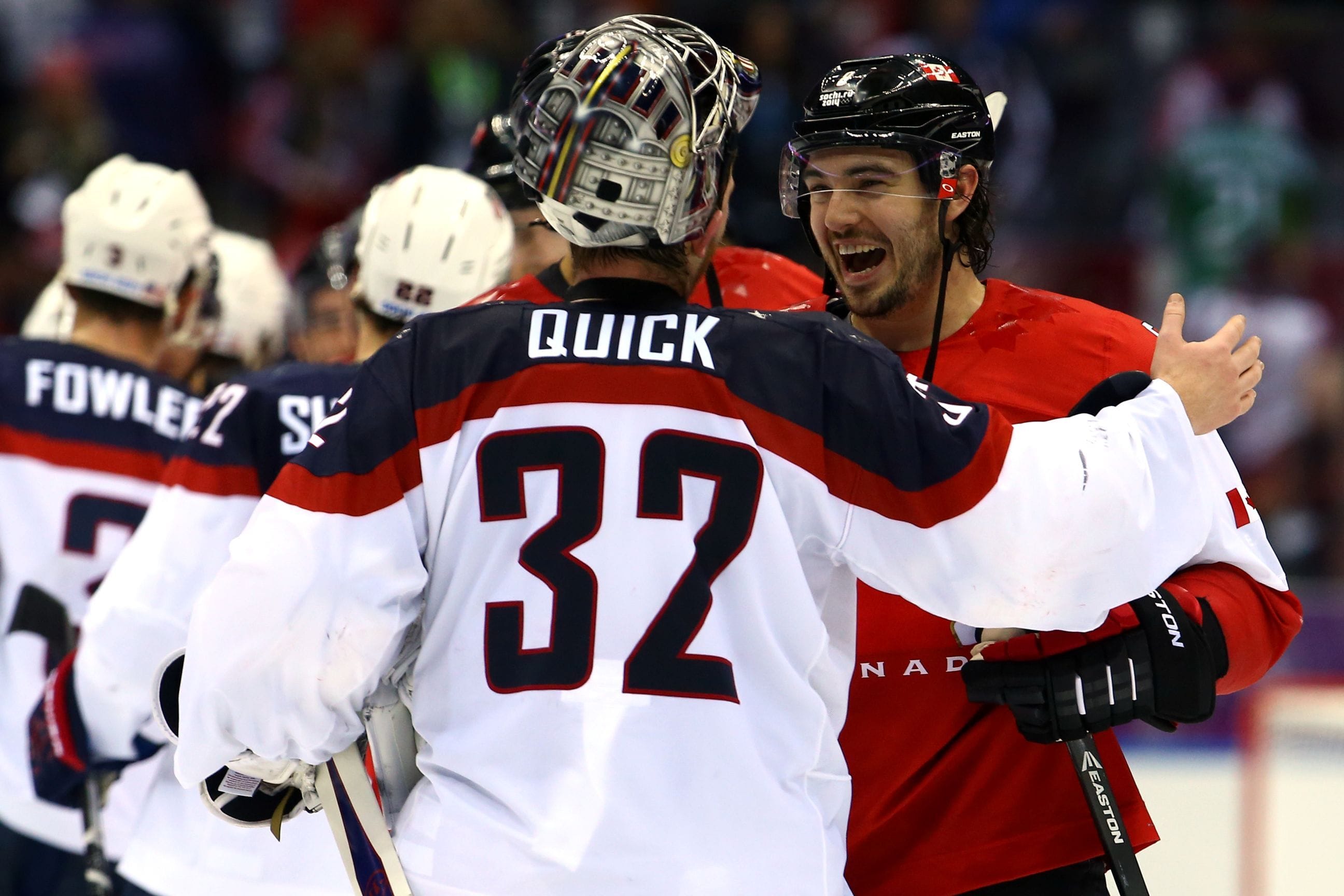
Kevin Shattenkirk, a member of the United States squad at Sochi 2014, recalled returning to the St. Louis Blues and having to watch their NHL teammates and Canadians, Jay Bouwmeester and Alex Pietrangelo, along with head coach Ken Hitchcock, show up with their gold medals.
But that’s part of the deal and Shattenkirk recalled Blues and fellow U.S. teammate David Backes in the locker room reinforcing that whatever the situation was back home in the NHL, it stayed there for the duration of the Olympic tournament.
“We kind of followed his lead on that,” Shattenkirk said.
And he did recall a moment when they were en route to an easy win over Slovakia, setting up a goal on Blues netminder Jaroslav Halak. The look on Halak’s face was as though to say, ‘Really? You’re doing that to me? Really?’
Niederreiter didn’t have a specific moment like that in Sochi, but four years later at the world championship, Switzerland upset favored Finland in the quarterfinals. He knew his good friend Granlund was feeling the pain of the loss in handshake line.
“The best feeling was I knew, shaking his hand, looking at his eyes, and just telling him, ‘You played well,’ or whatever, even though I know he was fuming inside, like he's going to hear that for a long, long time,” Niederreiter recalled.
“Obviously, Switzerland wasn't supposed to beat Finland back then. But those are just the moments, playing against your buddies or playing against teammates in different countries where you cherish it forever,” he added.
Niederreiter is now a member of the Winnipeg Jets.
He travelled to Milan, not as a young man making his way in the game, but as a seasoned veteran on a Swiss team that has a chance to be a surprise dark horse in the tournament.
He will join NHL teammates Josh Morrissey, who will be playing for Canada, and Connor Hellebuyck and Kyle Connor for the U.S. They haven’t spoke much about the tournament internally.
But recently, when the Jets played New Jersey, Niederreiter found a few minutes to chat with Swiss teammates Nico Hischier and Jonas Siegenthaler, both of whom will be playing in their first Olympics, about what to expect and the excitement of the moment.
“There are no friends on the ice,” suggested Hischier, who has captained Switzerland at a number of international events.
Radko Gudas was just a toddler when his father, Leo, had a bronze medal slipped over his shoulders at the Albertville 1992 Winter Olympic Games.
Later, as Gudas grew to play and love the game, he rewatched some of the games on old VHS cassettes.
“The younger generation don’t even know what that is,” the veteran defenceman said with a laugh.
Gudas’ father is still in the game, working as a skills instructor with Barys Astana – a KHL club based in Kazakhstan. There remains a healthy family competition when it comes to Olympic medals.
“He still holds it over me that he has one,” Gudas said during a recent conversation.
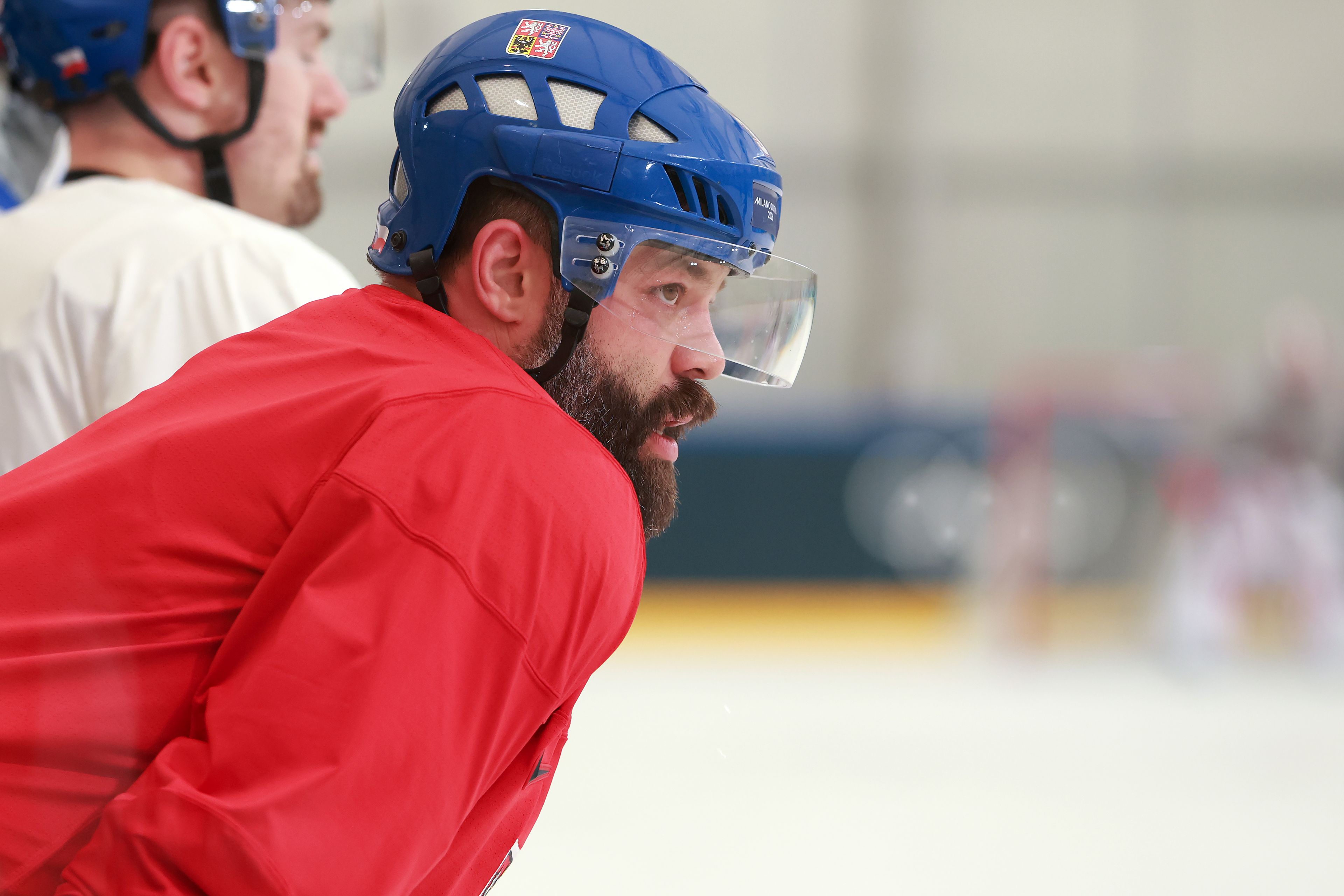
That conversation takes on even greater import now as Gudas is set to be one of the leaders for Czechia in Milan.
It will be his second go-round as an Olympian, joining a small group of NHL players in Milan who know what to expect. He’s prepared all the pomp and ceremony and all of the mental challenges that come with performing on an international stage.
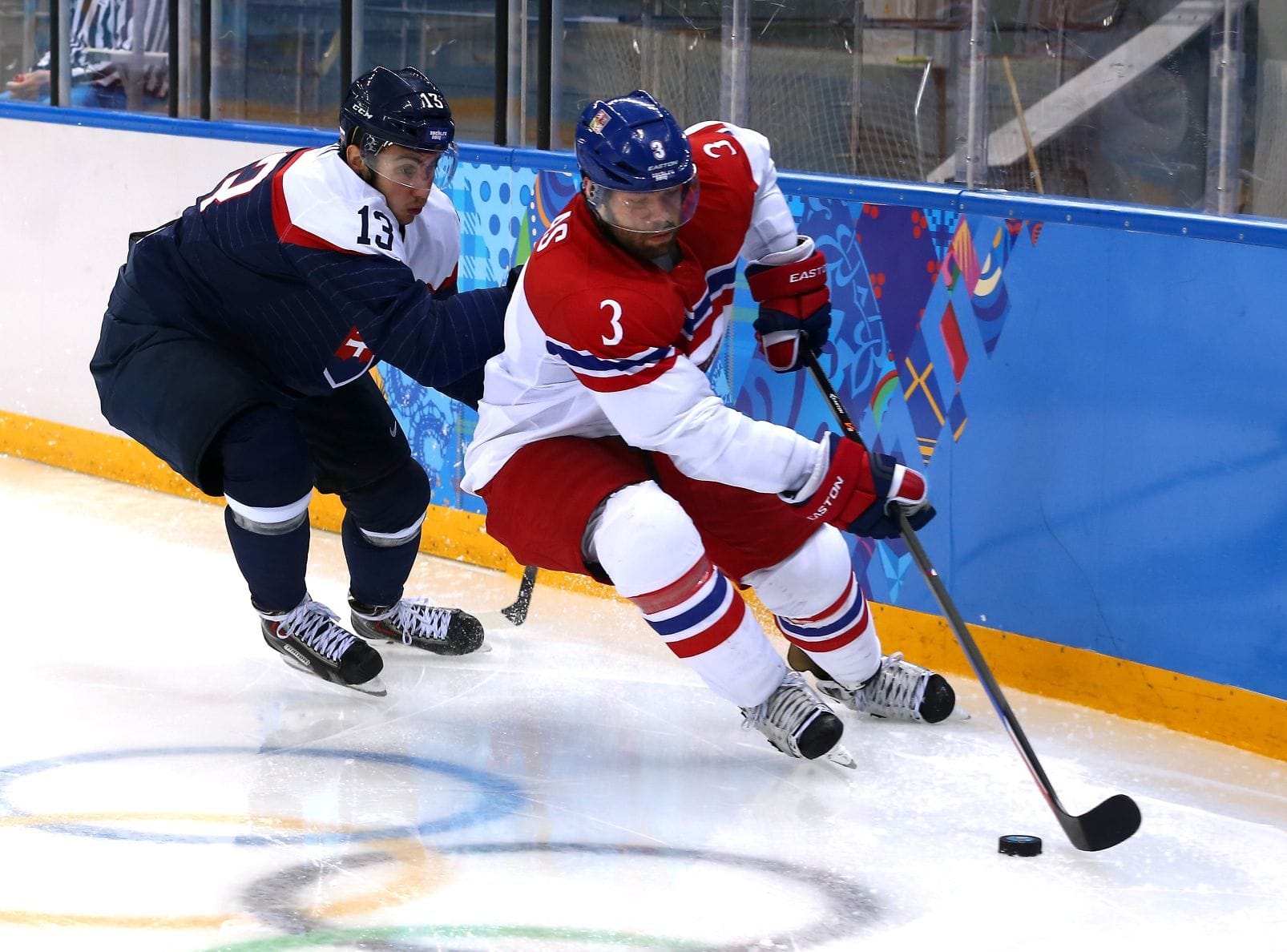
In the months leading up to Sochi 2014, Gudas was a young player making his way in the Tampa Bay Lightning organization. He and countryman Ondrej Palat had played together in the minors and become good friends when Czech head coach Alois Hadamczik passed along word the young players were in line for an Olympic roster spot.
The two sat together on the charter headed to Russia looking at the legion of NHL stars sitting around them on the plane and roomed together in the athletes’ village in Sochi.
Shedding, if temporarily, his Tampa Bay Lightning identity, and embracing that of Czechia’s national Olympic team included being embraced by players and countrymen who had been idols of his and every other Czech kid growing up. Players like Patrik Elias, and of course the incomparable, Jaromir Jagr.
“I remember we got to sing happy birthday to Jagr,” Gudas said of a moment that remains indelible for him a dozen years later.
Gudas remembered watching how those players prepared for the games and how they spoke in the room as they prepared to face the rest of the sport’s greatest players.
“It was like a dream come true to be around these legends,” Gudas said.
Now, he will be an alternate captain on a Czechia team that will boast young stars like Martin Necas and David Spacek (son of long-time NHL player Jaroslav Spacek, who was on that 1998 gold medal-winning team and took part in two other Olympic tournaments).
“It’s going to be a fun experience for all of us. I think we’re up to the challenge,” Gudas said.
Among the lessons he will try to impart is that it’s okay to set aside friendships and relationships with teammates back home as he did in 2014.
“It’s obviously a little bit of a mental game,” Gudas said of that process.
Although Steven Stamkos and Valtteri Filppula were injured, other Bolts like Martin St. Louis (who replaced Stamkos on the Canadian roster), Richard Panik and Sami Salo were also in Sochi with Gudas.
“You wish them well, you wish them the best, but at the same time you want to do this for your own nation,” Gudas said.
Still, when you run into your NHL teammate in the athletes’ village or, of course on the ice, which is often, it’s something that gives pause.
“Those are always little strange moments,” Gudas acknowledged. “It’s just part of the sport – it’s once every four years.”
In the ensuing years since Gudas hit the ice with his Czech heroes in Sochi, he and his wife have added four children to the mix. He’s played in Philadelphia, Washington, Florida and now is a member of the Anaheim Ducks.
All four kids are in Italy as Gudas tries to pull even with his father on the Olympic medal count.
“This will be a great experience for all of us as a family,” he said.
But for Gudas, it isn’t just an opportunity to add to his country’s rich hockey history but to be part of something even more timeless, the Olympics themselves.
“It’s history, 1,000 years, you’re part of history. It’s an amazing feeling,” Gudas said.
(Feature photo courtesy of Getty Images)