

The sheer magnitude of the possibilities are frankly staggering.
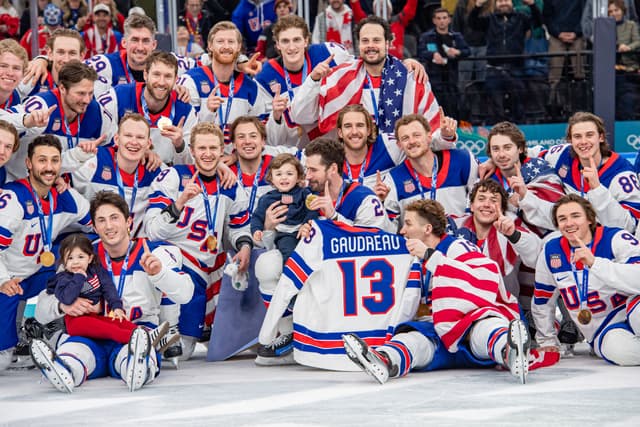
What would it be like for Bill Christian, an Olympic gold medallist in 1960 who watched his son, Dave, win gold in 1980 with the “Miracle On Ice” team, to see his grandson Brock Nelson bring home the family’s third men’s Olympic hockey gold?
To speak such thoughts out loud is almost to shatter the moment.
“Still, to this day, he'll say ‘It was fun to win the gold medal, but to watch my son win the gold medal was even a better feeling.’ Now, he's even more emotional with Brock, he can hardly even talk about it. It really is, it's almost too incredible to think about,” Brock Nelson’s mother, Jeri Christofferson, said of her father.
Earlier in the tournament Christofferson asked Brock if he’d called his grandfather, who, at age 88, couldn’t make the trip to Milan. He confessed to his mom that he had not. Almost as if it was too much.
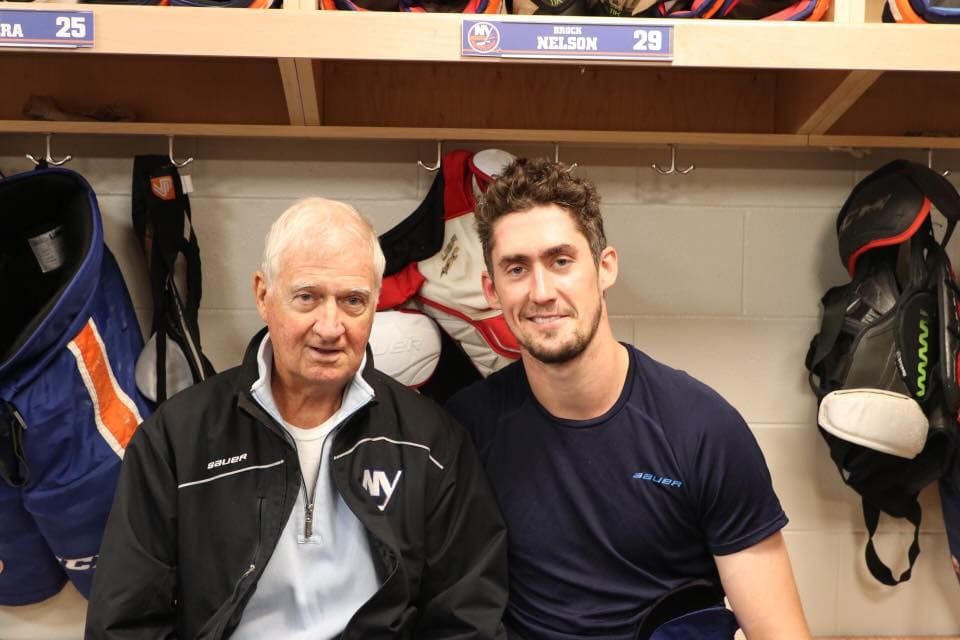
“The two of them are very emotional, so I asked him, ‘have you talked to him yet?’ And the first time he said, ‘no, not yet because I know on both ends the tears come quick.’ And they're, of course, good tears and happy tears,” Christofferson said. “So, yeah. Our whole family is pretty emotional when it comes to anything that's an achievement for any kind.”
Christofferson isn’t kidding.
In Team USA’s first game, Nelson set up the first goal for the United States, and his younger brother, Blake, could barely contain his emotions.
“I turned and looked at him and he had big tears in his eyes,” Christofferson recalled. Then she began to tear up. And then they called the goal back.
There were more tears later in the period when Nelson scored. And that one was also called back.
“By the time the actual goal that counted came, our emotions had already gone out so we were cheering loudly,” Christoffers said with a laugh. “It's a tremendous experience for all of us.”
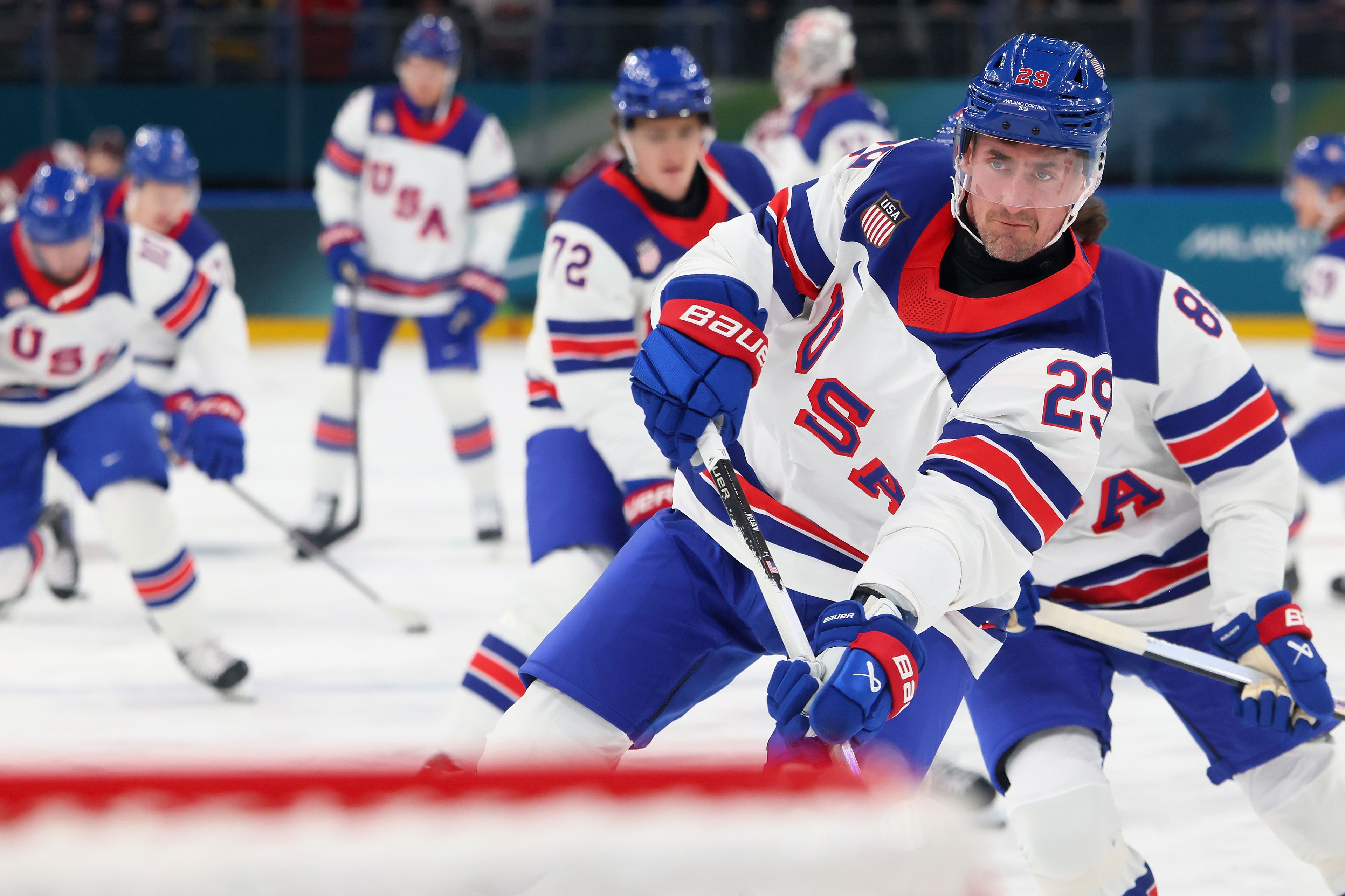
This first trip to the Olympics for Nelson – and the first time NHL players have taken part in then tournament since 2014 – has been all kinds of memorable. Among Nelson’s support group in Milan are his four children ages seven, six, four and three.
“Yeah, it's cool. I think the older ones understand it a little bit and how cool it is. I mean, it’s kind of a pain with the travel, but I think they understand that. Flying to Italy was no joke, and it's a big trip, and they understand the importance of it. Fun to just kind of see, like, my son be so excited around seeing other guys,” Nelson said.
For Nelson, though, his gold medal past and his strong connection to two of the greatest moments in U.S. hockey history, are close companions.
When Nelson arrived in the athletes’ village he, like some of his teammates, found a package of cards and letters and photos courtesy of those closest to him including his uncle Dave, Christofferson’s older brother, and Bill.
“To think of what they did, obviously, at the Olympics, too. It's pretty special to have that chance. It gives me a lot of chills and goosebumps and emotions. Just trying to take it all in with them and enjoy the whole experience,” Nelson said.
The family’s history is something cut from a Norman Rockwell work.
The Christian family lived on the Warroad River in Minnesota. After Thanksgiving dinner, Bill would go and test the ice, and if it was solid enough, that would begin the outdoor hockey and skating season.
The Christians helped build the arena in town and their famous hockey stick factory was right next door to the arena. Nelson and his siblings would play in the factory if they weren’t on the river or in the rink amid the distinctive smells of the lacquer and coatings and the palettes of sticks bound for hockey rinks around the world.
Nelson recalled his grandfather picking him up from school and going skating with him on the river or taking him and a pal or two to the rink for some impromptu shinny.
“He's been my biggest fan and supporter from when I was just a little boy. I remember skating with him on the river back home and at the rink at Warroad,” Nelson said. “Just kind of learning and loving the game. Really special. Never any pressure from him to be here. Always supported me, youth hockey and on. And still sending messages even now and watches all the games, no matter the time. So thankful for him and a great role model for me.”
When Bill Christian and his teammates were competing in Squaw Valley (now known as Palisades Tahoe) at the 1960 Olympics, the family couldn’t afford to go so they listened to scratchy broadcasts on the radio or tried to follow grainy black and white figures on the screen, gleaning ultimately that the U.S. had won the nation’s first-ever Olympic men’s hockey gold.
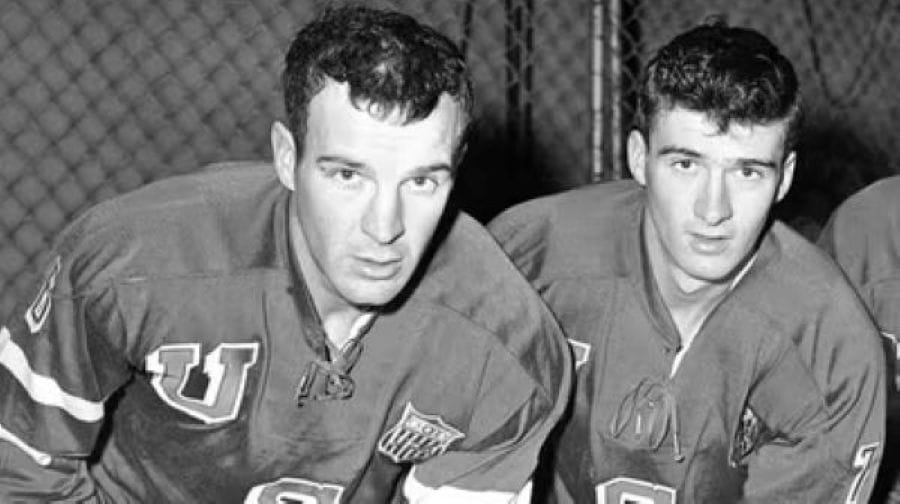
Speaking to the lack of pretense in the Christian family, Bill’s gold medal sat on a little stand on the family’s coffee table in the living room.
“We were allowed to go in there and pick it up and touch it. It was on a little domed display, and we'd put it in our pocket and took it to school for show and tell,” Christofferson recalled.
“It was one of those things where there wasn’t a ton of discussion. The Christian family is a very humble family. There’s not a whole lot of discussion about greatness, by any means. The older we got, it was probably brought to our attention because of the people that would meet him and be enthralled about the whole thing.”
We often use the term ‘hockey royalty’ but there’s hardly anything royal about the Christian family and their bearing. The gold medals were things that happened. It didn’t change their belief system or character or identity.
Christofferson recalled taking Brock to see her brother, David, in Moorehead, Minnesota, for a youth tournament.
“And I said, ‘do you think you'd want to see David's gold medal?’ We never talked about it. It wasn't a topic at the dinner table. And I just remember him putting it on his neck and wearing it. Like, wow. You know, that feeling. But he was young. And so, I had the three kids all put it around their neck and thought it was great. And I remember Brock being young and putting on one of my dad's replica jerseys from the 60s. And he had all kinds of stuff hanging in his basement all the time. Pictures and whatever. But that wasn't the focal point,” Christofferson recalled.
Twenty years after winning his gold medal, Bill Christian packed up his family and they headed to Lake Placid to watch Dave Christian and the rest of the Miracle boys. Christofferson was in the 11th grade at the time and she’s never been back to Lake Placid even though her brother tells her the house they stayed in is still there.
She recalled the energy in the building change once the U.S. took the lead over the powerful Russian team. Even before that, there was just a feeling in the resort town of something historic unfolding.
“The crowds got bigger and it was just like an electric feeling going in and out of the rink and just in the streets and the people were, I remember it just being a really happy and everybody was just kind of buzzing,” Christofferson sai
She remembers her father watching Dave and the rest of those fabled 1980 U.S. players approach the same incredible feat that he and his teammates had accomplished and how Bill seemed to be seeing the games differently than anyone else in attendance.
“Once you're a player, I think you live that as they're playing, you're seeing it from a whole different perspective,” Christofferson said. “As a spectator cheering for the team, they're actually in the mix of the play. So, he watches the game and he's moving and he's twitching a little bit and thinking it through from a player perspective.”
No doubt Bill Christian is feeling these same emotions as he watches the games unfold in Milan from afar. He is 88 now and writing his memoirs. That project is on hold now until the end of the Milano Cortina 2026 Winter Olympics.
“The epilogue will be all about Brock in the Olympics in Milano,” Christofferson said.
All this talk of legacy and history loses its luster if Nelson isn’t playing the way he is helping an undefeated team on both sides of the puck, just as he does in Colorado with the NHL-best Colorado Avalanche.
“I’m aware of the story but what I’ll tell you is that Brock Nelson has made both of these teams because he’s a great player and he’s deserving of it and he’s earned the opportunities that he’s gotten through his own performance and his body of work,” Team USA head coach Mike Sullivan said of the whole Nelson family history.
“The story I think is a great story and I think that just adds to Brock’s legacy that he’s built to this point. To have an opportunity to participate in these international events is an incredible privilege and a family lineage like Brock’s I think just brings that to the forefront.