

In the basement of Victor Hedman’s Tampa Bay area home, there is a room that is quite simply, the hockey room.
It’s where his children, aged five and three, spend most of their waking time with hockey sticks, gear and nets. It’s where dad spends most of his waking time as well when he’s not performing his duties as captain for the Tampa Bay Lightning.
Much has changed for Hedman since NHL players took part in 2014 at Sochi.
At the time, Hedman was an emerging young defender with a Tampa Bay team that had selected him second overall in 2009.
The decision to leave him off a Swedish roster which would ultimately fall to Canada in the gold medal game remains up for debate. What is not debatable, is how that exclusion felt for Hedman.
“Huge disappointment for sure,” Hedman acknowledged. “But, at the end of the day, maybe that’s kind of helped me too, with my motivation and moving forward. And I was still young at the time. And I thought I have four years, we get another chance.”
It didn’t turn out that way, of course, as the NHL was absent from the Olympic tournament in 2018 and again in 2022.
“It’s kind of been the Olympics that you miss that has haunted you,” Hedman acknowledged.
In between, Hedman has won back-to-back Stanley Cups with Tampa Bay, a Norris Trophy as the NHL’s best defenceman and the Conn Smythe Trophy as playoff MVP. He was the captain of Sweden at last year’s 4 Nations Face-Off.
He is a central figure on the Swedish roster that looks to reprise their gold medal performance from 2006.
The future Hockey Hall of Fame inductee is now 35 and is equally aware of his hockey mortality and of his good fortune.
That’s why these coming days in Milan appear on the horizon with such great import, not just to Hedman, but his family.
His wife, parents, aunt, uncle, in-laws and maybe his brothers if they can get time off work, will all make their way to Milan. And, of course, his kidsdonning brand new Swedish jerseys.
“They're still very young and maybe don’t really know the magnitude of an Olympics. But for them to get to experience that at that age, it means a lot to me and obviously my whole family that we get to go there together and share the moment together. So, we're super, super excited,” Hedman said.
As the days draw closer to the Olympic tournament, Hedman thinks not of what might have been in 2014 or the lost opportunities in between. He only thinks about soaking in the moments and the joy his family will share in whatever Olympic moments are ahead.
“I’ve been blessed with so much success we had as a team here. Not everyone gets to play in the NHL, let alone playing in the Olympics. So, for me to get that chance, I feel super privileged to be in this position,” Hedman said. “Looking back at your career, this is obviously going to be a top or near the top of the list, and hopefully with a gold medal.”
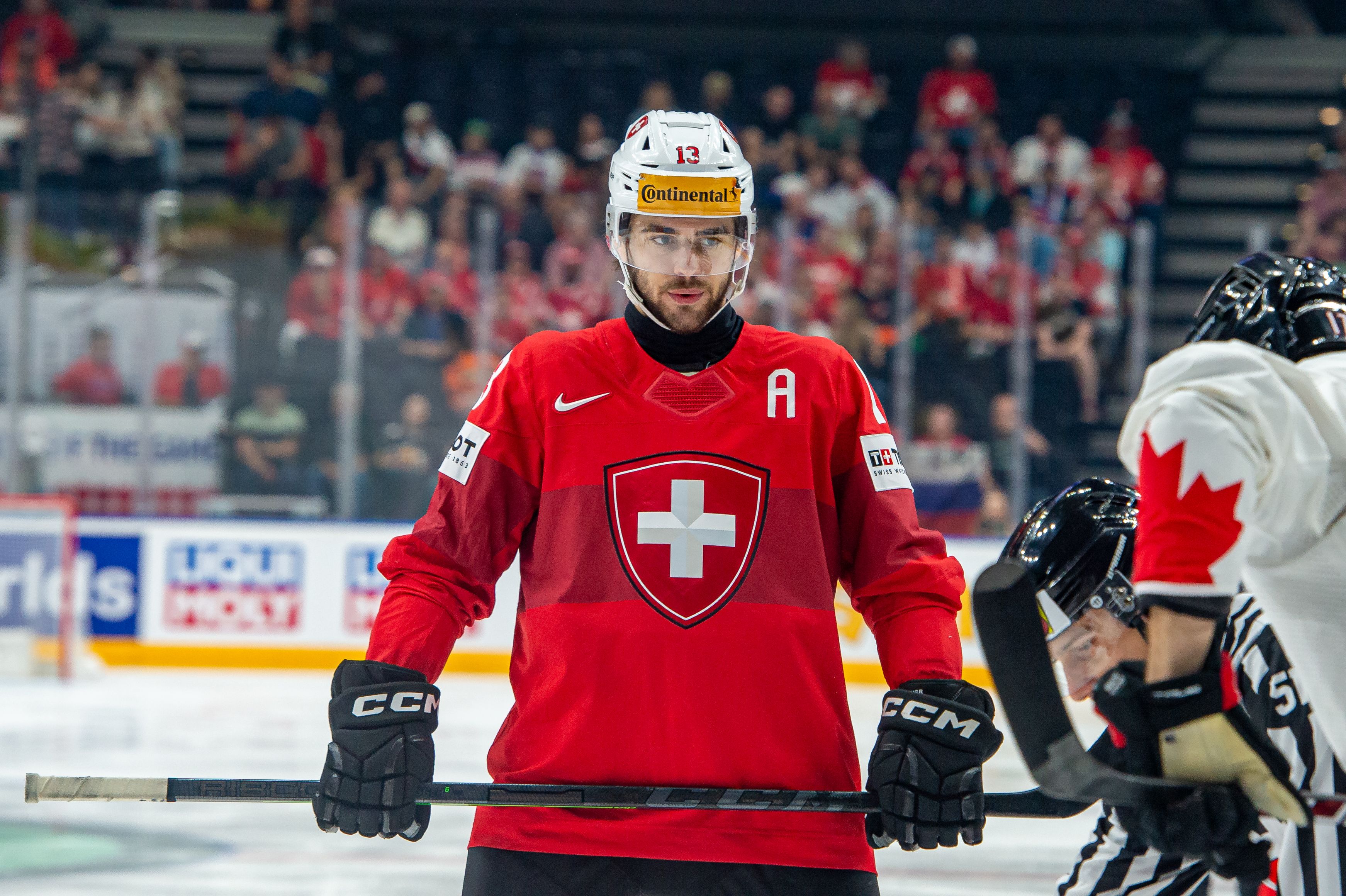
At the time Hedman was finding out that he wouldn’t be headed to Sochi, New Jersey Devils captain Nico Hischier was two years removed from having competed in the world-famous Quebec International PeeWee Tournament.
The difference in ages between Hischier and Hedman helps to illustrate what the gap in NHL participation in the Olympics means to the dozens of NHL players who will be participating in their first Olympic Games in Milan.
Different, yes, but what is also clear is the sameness for the vast majority of the nearly 150 NHL players named to one of the 12 teams that make up the men’s ice hockey tournament in Milan.
Whether you’re an older player like Hedman or Canadian netminder Darcy Kuemper, who is a first-time Olympian at 35, or a youngster like teenage star Macklin Celebrini, named to Canada’s roster at age 19 – these are moments that are being savored, years in the making.
That anticipation is powerful and constant, no matter your birth date.
“Dream come true for sure,” Hischier, 27, said. “It’s something I've never experienced yet in my career and through hockey, I have been very fortunate to experience a lot of things, but like an Olympic Games, that is something I haven't done. And to have the chance to do that now, I feel very grateful for that.”
It’s a short train ride from Visp, Switzerland, where Hischier grew up playing the game, to Milan, and the list of family and friends who hope to watch Hischier play for Switzerland is long. Included in that list of hopefuls in his grandmother who is in her 80s.
She, like many of Hischier’s inner circle, have followed his career closely, including his first overall selection by the Devils in 2017, religiously.
“I’m far away from Switzerland and they follow every game and it's a fun thing for them to do too, to follow my career and it would be just something special for sure to have them there,” Hischier said.
Hischier is no different than his peers as he awaits the NHL’s descent into Milan. All those players who will be getting their first taste of Olympic life, all wondering the same kinds of things, especially what will it feel like to have an Olympic medal placed over their head.
Imagine some 150 children dreaming of Christmas morning or of summer vacation all at the same time?
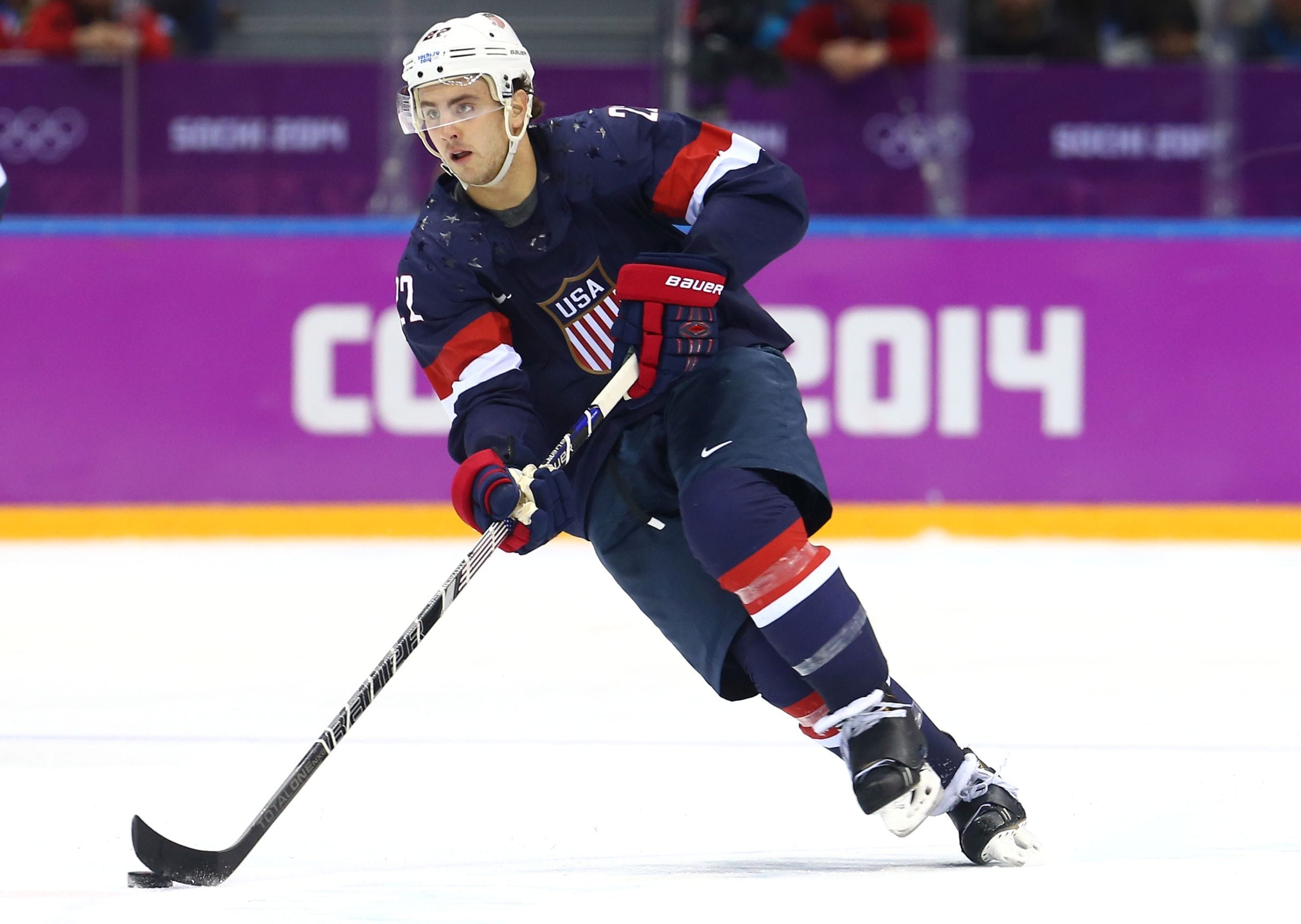
That’s how former United States Olympian Kevin Shattenkirk recalled feeling about the 2014 Olympics, as a kind of giant sleepaway hockey camp with all of his American pals. Except, this sleepaway camp was on the shores of the Black Sea and included all the other best hockey players from around the world. And not only that, at the same time, he realized this was a giant sleepaway camp for all the best winter sport athletes in the world.
All under one gigantic roof.
The U.S. team headed to Sochi was announced after the 2014 Winter Classic in Ann Arbor, Michigan. Youngsters skated onto the ice wearing a U.S. jersey with a player’s name on the back. Shattenkirk’s name was the second-last to be called. Maybe the last. Regardless, it was nerve wracking as he watched while on the phone with his parents.
The skilled defenceman played 952 NHL games and won a Stanley Cup with Tampa Bay in 2020. He is now a divisional player rep with the NHLPA.
The memories of Sochi remain vivid. Shattenkirk roomed with longtime pal Ryan McDonagh.
One night, Shattenkirk and his teammates watched the halfpipe skiing and snowboarding competition, and on another, the speed skating relays. They worked out with and cheered on the American women’s hockey team, and in conversations, shared their mutual dislike of their Canadian counterparts.
They shared a few beers with the American curling team.
There is an actual living piece of Sochi that is a constant reminder of the experience in the form of a rescue dog that came home from Russia and continues to live with Shattenkirk’s parents.
While the competition is the thing, of course, the Olympics can be defined in large part by simply being there, by absorbing the moment. As much as it hurt for Shattenkirk and Team USA to come away from Russia without a medal – they lost to Finland in the bronze medal game – that is only part of what all NHL Olympians will carry with them no matter the outcome in Milan.
“Being a part of something that’s being watched on a world stage like that and being at the centre of it is something these guys will take with them for the rest of their lives.”
(Feature photo courtesy of Getty Images)