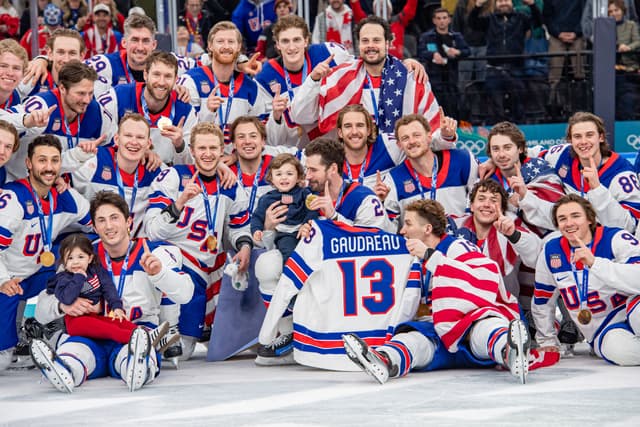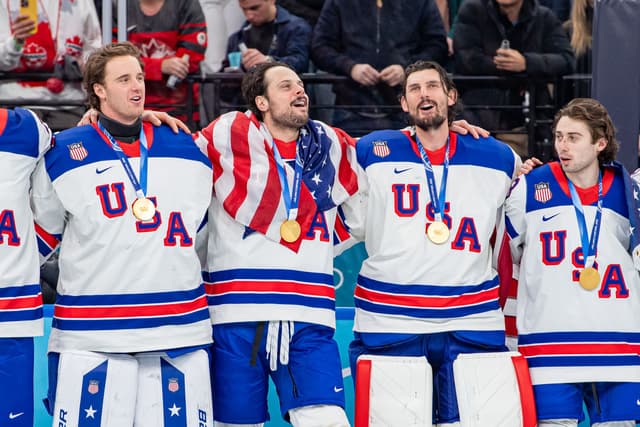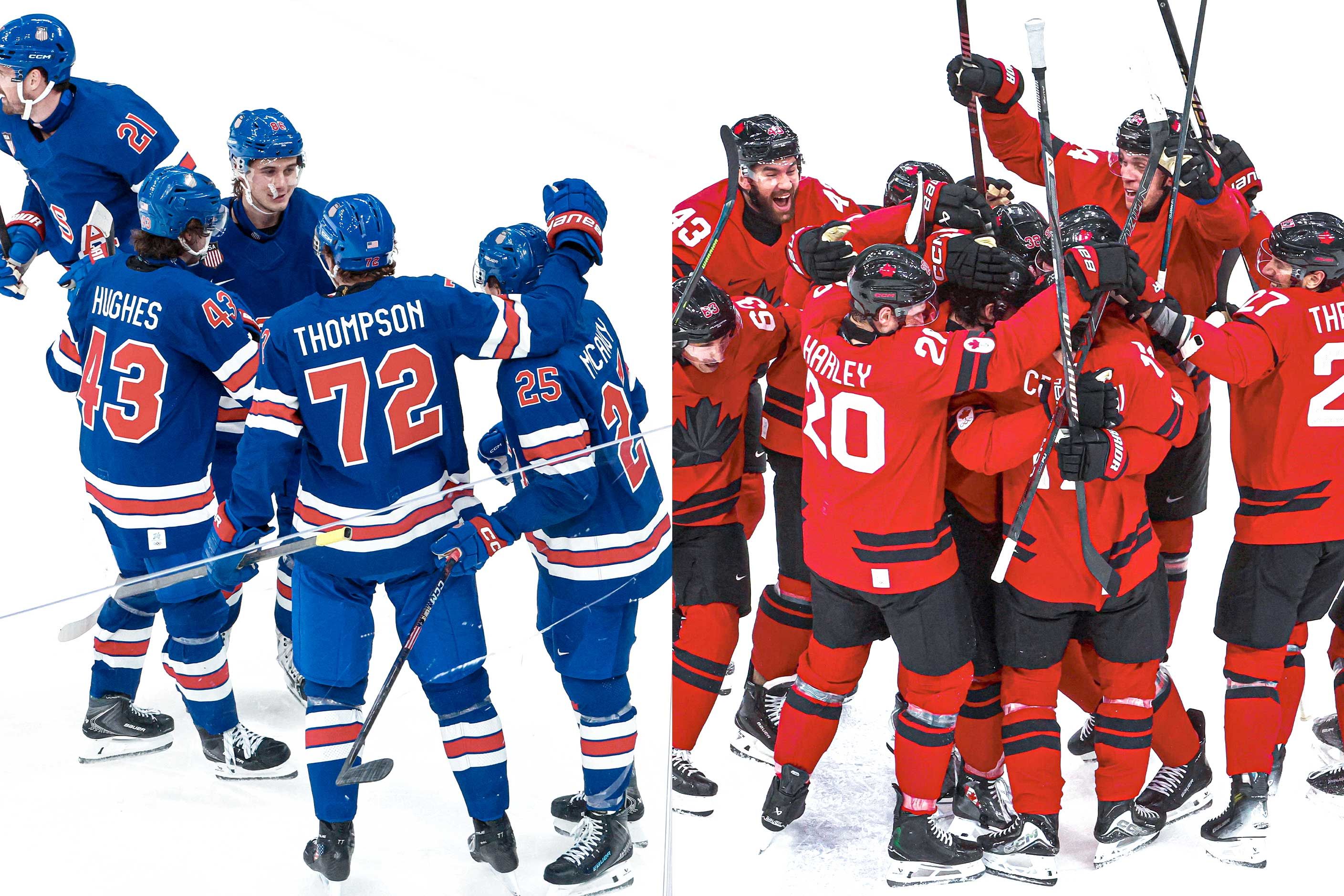


And so we stand on the brink of what could stand as one of the greatest moments in hockey history.
Team Canada versus Team USA. A long-anticipated gold medal showdown between the best of the best from two long-time neighbours and rivals.
Think “Miracle On Ice” in 1980, the last time the United States won an Olympic gold medal in men’s hockey.
Think Vancouver, 2010, and Sidney Crosby’s golden goal in overtime, giving Canada the gold over a plucky U.S. squad.
Think World Cup of Hockey 1996 and a next generation of U.S. stars upending a Canadian roster chock-a-block with future Hockey Hall of Famer inductees in Montreal.
Think 4 Nations Face-Off last year, with Canada besting the U.S. with an overtime winner in the championship off the stick of Connor McDavid.
Sunday’s clash in Milan between two undefeated teams at the Milano Cortina 2026 Winter Olympics is already trending towards being the most watched hockey game of all time.
If there are two teams who can make this match live up to its billing, it’s these two.
So, what are the key narratives that will help decide who emerges with a gold medal and a lifetime of joyous memories?
Glad you asked.
SIDNEY CROSBY – WILL HE OR WON’T HE?
It is the question on everyone’s mind, well at least on the minds of the 41.5 million Canadian hockey fans (give or take a few outliers who won’t be getting up early to watch the gold medal game) – will Team Canada captain Sidney Crosby suit up for the gold medal game or not?
Crosby left the quarterfinal game against Czechia with a lower body injury. He could not go for the semifinal game against Finland, but Crosby skated Saturday with a small group of Canadian players. Nick Suzuki said he thought the captain looked pretty good.
Earlier in the tournament, general manager Doug Armstrong told reporters that Canada wouldn’t be closing its practices to the media, but Saturday’s session was done in private, a nod to the important lineup decisions that loom for Canada. Head coach Jon Cooper said that a determination will be made Saturday evening on whether Crosby can go.
One thing for certain is Crosby won’t dress if he can’t play and he won’t be on the bench in any fashion if he isn’t playing. Crosby’s value to the team is so immense it’s hard to know where to start. He was playing with Mitch Marner and Mark Stone on a very effective line that allowed Cooper to sometimes load up with the Mach 3 line of Nathan MacKinnon, Connor McDavid and Macklin Celebrini, or spread those players out on other units.
Beyond that, the simple fact that he is Sidney Crosby, all-world leader and inspiration, transcends the six points he’s collected in four games in this tournament. He has been around the team since the injury, offering insight and encouragement. It’s fair to say Team Canada looked different without Crosby in the semifinal as they fell behind Finland 2-0 before a late power-play goal pushed them to the gold medal game.
Quite simply, if Crosby plays, Canada’s chances of winning go up exponentially.
THE HUGHES FACTOR
If Team USA comes away with a gold medal win for the first time since 1980, it’s a fair assumption given what has transpired here in Milan that one, or both, of the Hughes brothers will have a hand in the victory.
Quinn, of course, was injured prior to the 4 Nations Face-Off and didn’t participate. It’s clear his presence on a deep, talented U.S. blue line has changed the complexion of Team USA, maybe enough to swing the balance of power against Canada.
His overtime game-winner in the quarterfinals against Sweden was classic Quinn Hughes. He has seven points, most among any defender at the Olympics. His brother, Jack, took umbrage with the suggestion earlier in the Olympic tournament that he didn’t have a strong showing at 4 Nations. Whether he did or didn’t is now moot. What is not in question has been the Hughes’ value to the red, white and blue in Milan.
Starting on the fourth line with Brock Nelson and J.T. Miller, and sometimes Vincent Trocheck, Jack Hughes has seen his role increase from game to game here in Milan. He has been dynamic with the puck and creating offence from plays that seem destined to die a quick death. He has six points and his emergence in Milan has given head coach Mike Sullivan all kinds of flexibility with his deployment of forwards.
“He’s a terrific player, mentally tough,” Quinn Hughes said of his brother. “Just a testament to where his mentality is at 24 years old and he's one of the best players in the world and you're seeing it right now live.”
THE LAST LINE OF DEFENCE
No surprise, but the goaltending for both Canada and the U.S. has been exemplary at the Olympics, and frankly there’s not much to choose between Team USA starter Connor Hellebuyck and his Canadian counterpart Jordan Binnington. The numbers include identical 4-0 records and sub-2.00 goals against averages, and they tell some, but not all, of the story.
How about Binnington’s stop on Czechia forward Martin Necas on a breakaway late in Canada’s overtime win in the quarterfinals? Or Hellebuyck’s calm demeanor as Sweden and the U.S. went to overtime in a 1-1 game in their quarterfinal match? Both netminders can expect to put up with lots of traffic around their respective nets, and just like the 4 Nations Face-Off finale featuring these same two netminders, it wouldn’t be surprising to see the game turn on one save at a critical juncture of what many expect with be an achingly close contest.
THE JUICE
No one is expecting the titanic start to the first meeting between these age-old rivals early in the 4 Nations Face-Off competition in Montreal, which featured three fights in the first nine seconds of a game won by the U.S. But the emotions of the moment on Sunday in Milan will be a key factor in deciding this game. Both teams have all kinds of weapons, and both teams can bring heavy hockey.
Jon Cooper united Tom Wilson, Brad Marchand and Sam Bennett in the semifinal and their physical play took a toll on the Finns. In some ways, the U.S. built their team for this opportunity and they will want to keep Canada on its heels with a robust, physical game. That means punishing Canada’s skilled players and defencemen as much as possible. The issue for the U.S. will be to avoid crossing the line and taking penalties. The U.S. have been shorthanded 15 times in the tournament, or an average of three times per game. They have yet to allow a power-play goal, but being shorthanded against Canada three times on Sunday is to court disaster with Canada’s power play humming at 43.75% efficiency with seven goals on 16 chances.
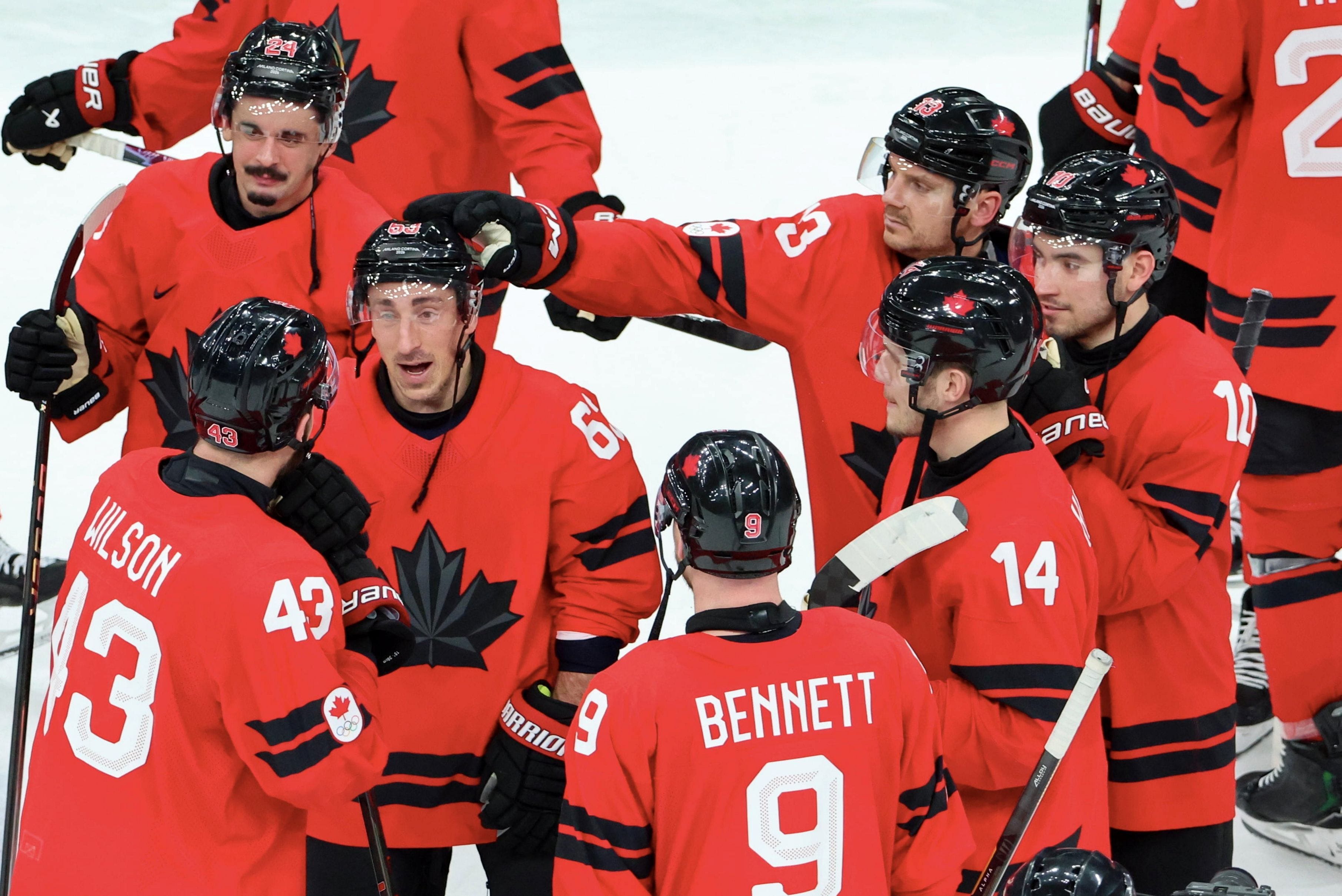
Worth noting is that this fine line cuts both ways. Canada has given up three power-play goals on just 11 opportunities. Beyond the penalties, not getting too overwhelmed by the moment will be the goal of every player on the ice.
“Everything, it means everything. Get to play for a gold medal on Sunday,” said Team USA defenceman Charlie McAvoy. “This is what you dream of since you're a kid, since the first time you see Miracle. This tournament, this whole experience has been incredible. I've had the time of my life. We get a chance to try and make our dream come true on Sunday.”
THE DARK HORSES AND OTHER BITS AND PIECES
These two teams are loaded from top to bottom, side to side with NHL stars. But does this game have the potential to be decided by a lesser light (lesser being a relative term when it comes to these two rosters)?
How about Brock Nelson, who has a rare opportunity to become the third member of his family to win an Olympic gold medal in men’s hockey after his uncle, Dave Christian, in Milan to watch his nephew, won in 1980, and his grandfather, Bill Christian, won gold in 1960. Nelson has had a great tournament and what a story that would be if he were to play the hero.
Tom Wilson has been full value for his inclusion on this Canadian roster and has chipped in four points and is plus-5 for the tournament.
On the injury front, Team Canada will be without Winnipeg Jets defenceman Josh Morrissey, who was injured in Team Canada’s first game of the tournament. Travis Sanheim has played well in Morrissey’s absence and was especially noticeable in the semifinal win over Finland. Tage Thompson left the U.S. semifinal win over Slovakia, but he skated Saturday and is expected to play.